The earliest Scapegoat concept is a multiplayer stalking simulator. To test out the concept of anonymity, our teammates joined an anonymous chat room and tried to figure out each other’s identities. We quickly discovered that familiarity is an unfair crutch, as the player who is the least familiar with the group has the most difficulty in guessing other identities, and the opposite is true for the most familiar player. In the next iteration, the other extreme is tested: no familiarity among players.
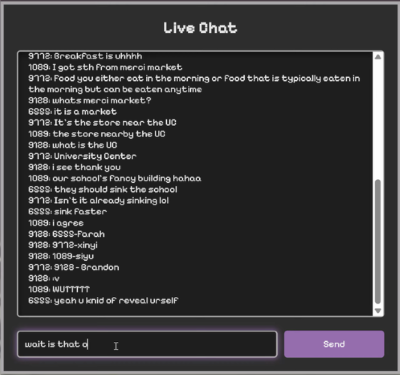
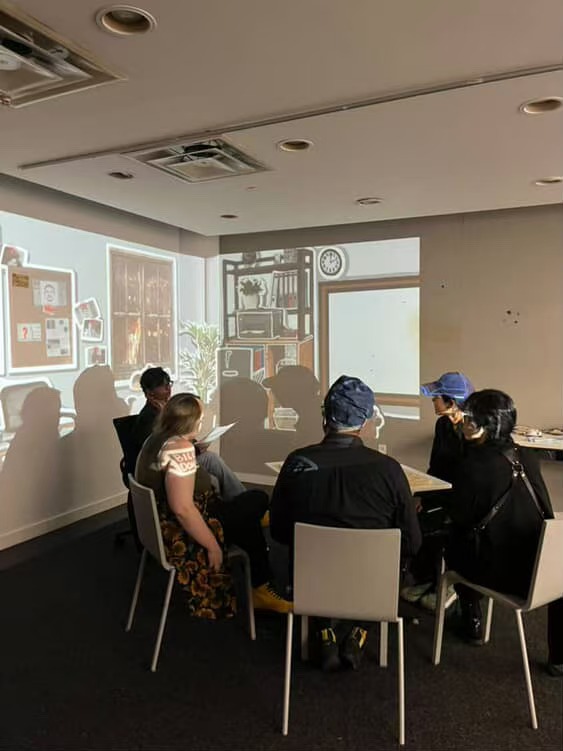
One of the early iterations is a live cat-and-mouse chase role-play in the form of social media stalking. This prototype explored the theme of stalking, and it also measured the power dynamics that might occur in play. However, through feedback, this theme greatly risks the chance of accidentally recreating real-life harmful dynamics. Our goal was not an inflammatory piece; thus, we decided to focus on the playful role-play and change the theme to a murder mystery.
The second iteration is a two-round murder mystery. Each player gets all the necessary information relevant to their character in their round and is set to start voting out the murderer after finishing their reading. Players were confused about the story and thus were left with no motivation to converse with other players. To readjust the game loop, game duration is extended to allow more context and more reasons for players to talk before the final showdown.
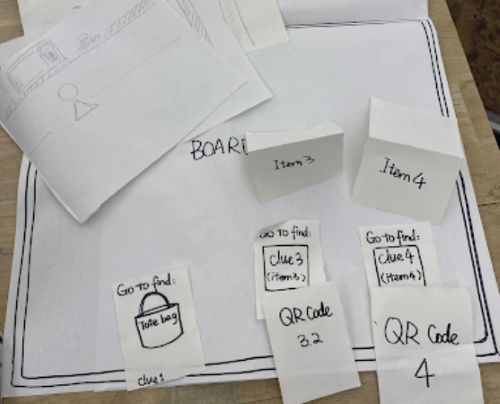
The Core Game loop is: Distribution of QR Code → Reading player character’s background → Search for the clues on the murder case → Pieces the clues together to conclude a suspect.
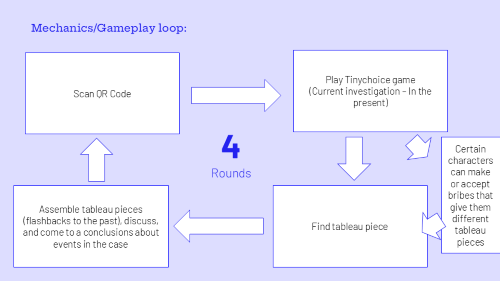
This is a simple loop, but to create an engaging gameplay experience and build suspense in the story, we needed a twist: players need a reason to lie. At first, we thought of creating flashbacks to break up the linearity of the storytelling; thus, players could withhold information until it is beneficial for them to share it. However, concerns were raised about potential confusion on the central story’s timeline; hence, this approach was scrapped.
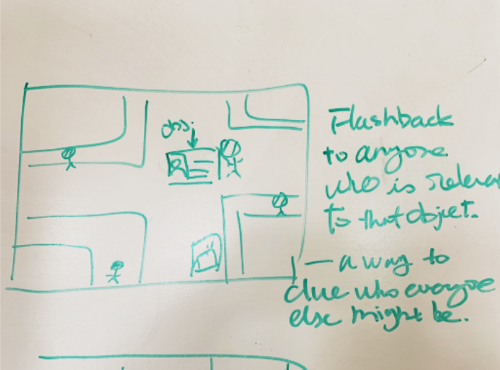
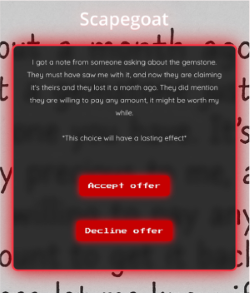
Bribery is our other solution, where players can make choices in the visual novel that will permanently alter the game’s progression. Players gain more autonomy and freedom in their strategies. They will need to prob harder, or lie smarter, in order to fulfill their character’s own goal during their final group discussion. Additionally, this mechanic balances each character’s significance in the story to make players’ decisions matter; as such, they would be more actively engaged in the role-play.
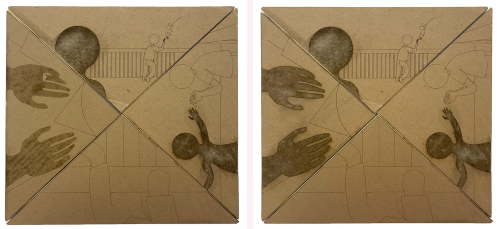
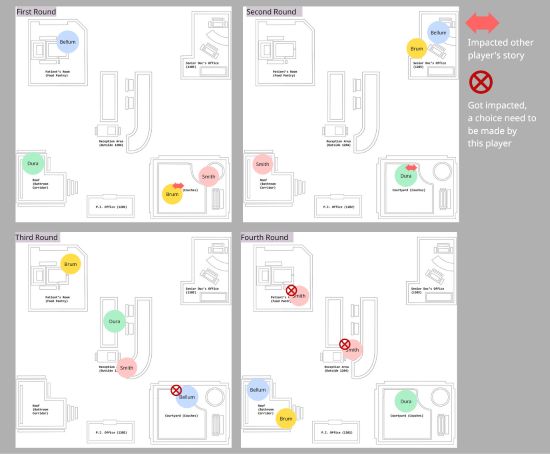
Object placements distribute players evenly throughout the map to avoid confusion on their assigned items and to ensure the impact of the bribery mechanic.
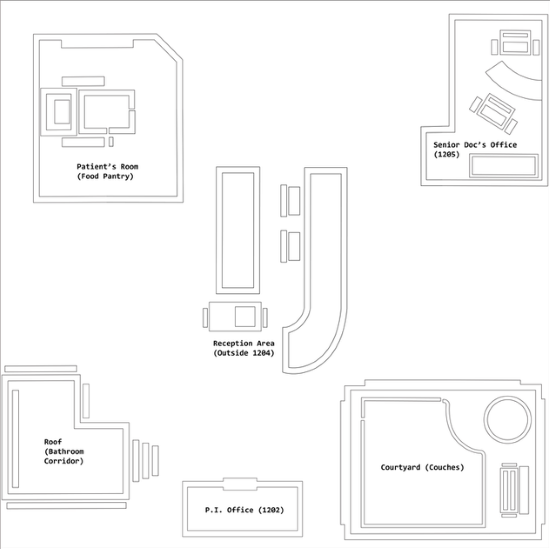
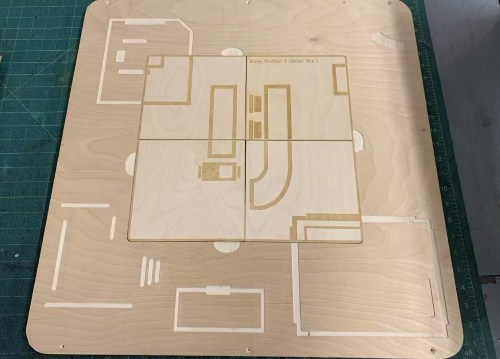
The map is designed in Illustrator, then it is converted to a readable file for the CNC machine.